
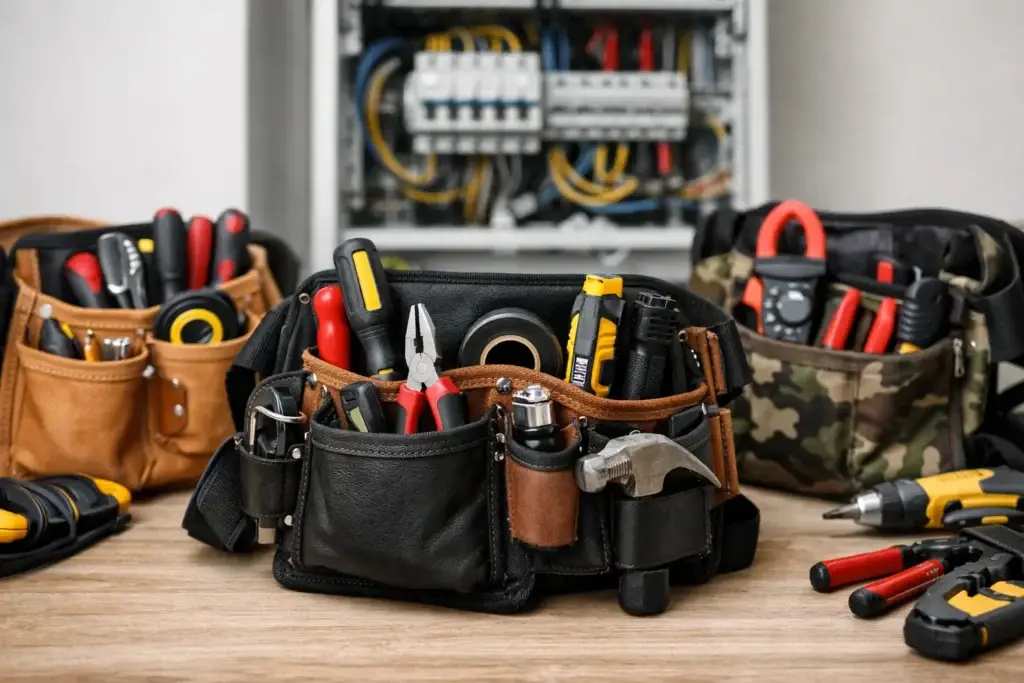
7 Best Tool Belts Electricians Can Rely On
Find the best tool belts electricians can use for service calls, rough-ins, and long days, with fit, storage, durability, safety, and buying tips.
The tool does not protect you; the gear you wear does. This category covers the protective equipment and workwear that belongs on every job: work gloves matched to the hazard, safety glasses and face shields, hearing protection for saws and hammer drills, respirators and dust masks, knee pads, and boots that survive a season on site. Buying guides explain the ratings that actually mean something, like cut and puncture levels for gloves, impact ratings for eyewear, noise reduction numbers for ear protection, and filter classes for dust and fumes, so you can tell a genuine safety rating from marketing language on the package. How-to articles cover fit, because protection that does not fit does not protect, along with inspecting gear for wear, knowing when a worn item must be replaced rather than trusted, and building a kit that you will actually wear all day instead of leaving in the truck. Whether you work full time in the trades or spend weekends on renovations, the guides here help you choose protective equipment that fits the work and lasts.
Find the best tool belts electricians can use for service calls, rough-ins, and long days, with fit, storage, durability, safety, and buying tips.

Choose construction work gloves by the hazards you face, then match cut resistance, grip, fit, warmth, and dexterity to the job at hand each day safely.